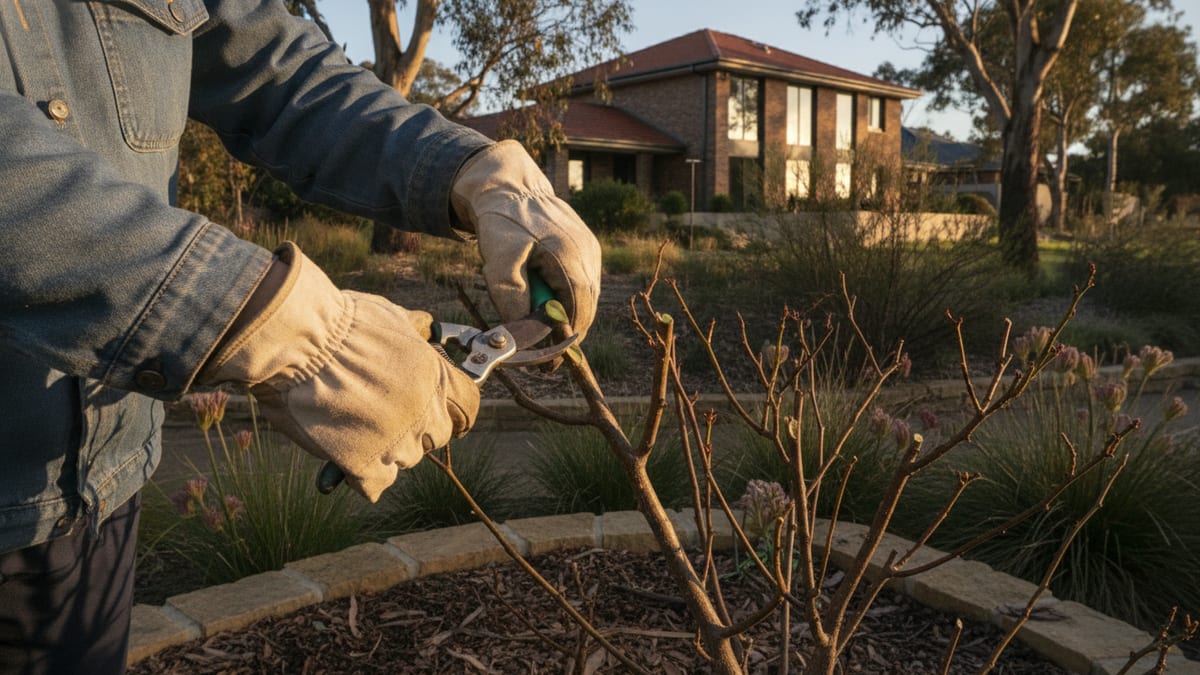
Winter is often seen as a quiet garden season, but it's actually an important pruning time. The key is knowing what to prune in winter and what to wait on.
What TO Prune in Winter
Dormant deciduous trees
Bare trees are easier to work with — you can see their structure clearly. Prune for shape, remove dead wood, and thin crowding branches.
Best trees to winter-prune: Fruit trees, maples, birch, ornamental deciduous species.
Established fruit trees
Winter is the traditional time for fruit tree pruning. Prune for an open, productive shape. This applies to apples, pears, plums, and citrus in full leaf.
Overgrown shrubs
If a shrub has become leggy or overgrown, winter is the time to hard-prune it. Bare branches mean you can see what you're doing.
Vines and climbers
Clematis, jasmine, and other climbers benefit from winter cut-back. Train them along their supports.
Dead and diseased wood
Anytime, but especially in winter when you can clearly see what's dead. Remove it down to living tissue.
What NOT to Prune in Winter
Spring-flowering natives
Banksias, grevilleas, acacias, and other spring bloomers are setting flower buds now. Pruning removes flowers. Wait until after flowering to prune.
Tender shrubs
Tropical or tender shrubs benefit from waiting until frost risk passes (September). Winter pruning on tender plants can kill them.
Camellias and winter-flowering plants
Many plants flower in winter (camellias, sasanqua). Pruning removes flowers.
Frost-sensitive plants
New growth from winter pruning is tender and frost-susceptible. Wait until spring for tender species.
The Timing in Sydney
Our winters (June–August) are mild. We don't get the hard freezes that make timing critical elsewhere. That said:
- June: Best month to prune. Still mild enough for good healing, not yet winter-cold.
- July–August: Later pruning works but risks new growth being caught by late frosts.
The One-Cut Rule
When removing branches, make clean cuts:
- Cut just outside the branch collar (the swollen ring at the base)
- Use sharp tools (dull tools tear bark and slow healing)
- Don't use "pruning sealer" (trees heal better without it)
- Never leave stubs
Size Limits
Don't remove more than 25% of a plant's total foliage in one season. You can do more severe pruning over 2–3 years, removing 25% each year.
Too much removal in one season stresses the plant and can kill it.
The Goal
Winter pruning should:
- Remove dead, diseased, and crossing branches
- Open the canopy to light and air
- Shape the plant for its natural form
- Reduce disease risk
Pruning isn't just trimming for neatness. It's about plant health.
Questions Before You Prune
Ask yourself:
- Is this plant flowering now or setting buds?
- Is it frost-tender?
- Can I see the structure clearly enough to prune safely?
- Will this pruning improve the plant's health?
If you answer "no" to most of these, wait until spring.
The Practical Approach
If you're unsure, wait. Spring pruning is almost always safer than winter pruning. The worst that happens is your plant flowers on full branches instead of a pruned framework.
Better that than accidentally killing a tender plant or removing next year's flowers.
When in doubt, leave it for spring.