Your garden's paving is either its best feature or its biggest regret. Getting it right matters. Here's how to think about paver choices.
The Main Options
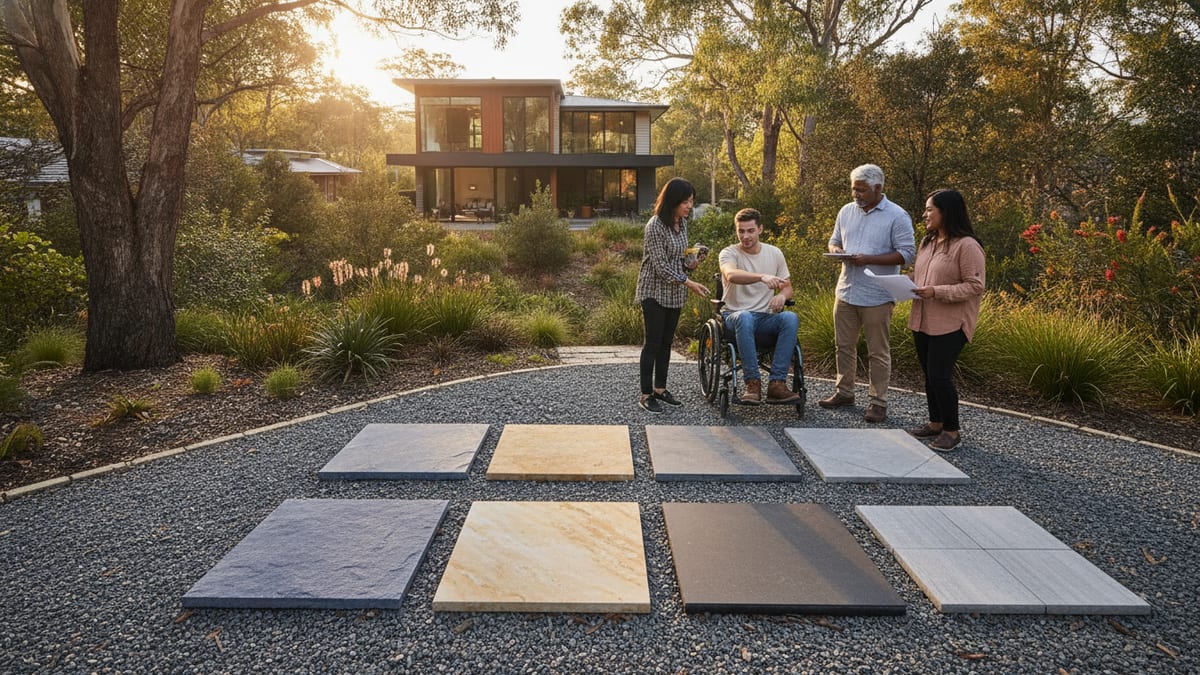
Natural Sandstone
Warm, beautiful, unique. Each stone has character. Weathers wonderfully. Expensive. Slippery when wet (but can be honed for grip).
Bluestone
Cool grey tone, very durable, consistent look, excellent for contemporary gardens. Ages well. More expensive than concrete, less expensive than sandstone.
Slate
Textured, dramatic, non-slip. Rich colours. Expensive. Needs care to avoid splitting in weathering.
Concrete Pavers
Budget-friendly, uniform, available in many finishes and colours. Modern industrial look. Can look cheap if low-quality. Excellent value if you choose well.
Porcelain
Hard, consistent, low-maintenance. Great for contemporary spaces. Can look sterile. Excellent grip even when wet.
What Matters in Sydney
Weathering: Our winters bring frost, our summers bring UV. Choose materials that weather gracefully, not materials that stain and fail.
Drainage: Heavy clay soils mean water sits. Choose pavers with good drainage behind them or risk pooling.
Slip-resistance: Wet paving is slippery. Textured, sawn surfaces are safer than polished.
Colour fading: Light colours fade in Sydney sun. If that matters to you, stick with darker tones or aged-look finishes.
The Hidden Cost: Installation
A $40/m² paver installed poorly looks worse than a $80/m² paver installed well.
Proper installation includes:
- Correct fall (slope) for drainage
- Compacted sand base
- Full bedding (not point-set)
- Tight, consistent joints
- Edging and proper subgrade
A cheap installer will skip these steps. You'll regret it in 3 years.
Colour Psychology
Warm tones (sandstone, terracotta): Inviting, luxurious, ages beautifully. Shows dirt. Can feel busy in bright sunlight.
Cool tones (bluestone, grey): Contemporary, calm, hides dirt better. Can feel cold. Works well in modern gardens.
Mixed (tumbled finishes): Best of both worlds — aged character with contemporary appeal. Hides imperfections well.
Practical Considerations
Budget: Sandstone $60–$120/m², bluestone $50–$100/m², concrete $20–$50/m², porcelain $50–$80/m². Installation adds $30–$60/m² regardless of material.
Maintenance: Porcelain needs almost nothing. Concrete needs resealing every 2–3 years. Sandstone needs occasional resealing and care. Bluestone is low-maintenance.
Longevity: All properly installed pavers last 20+ years. Sandstone and bluestone last 30+. Concrete lasts 20–25. Porcelain lasts 30+.
Our Recommendation
For the Hills District, we tend toward bluestone or quality concrete. Bluestone because it ages beautifully and suits both contemporary and traditional homes. Quality concrete because it offers excellent value and, if you choose a subtle finish, looks timeless.
Sandstone is gorgeous but high-maintenance. Reserve it for feature areas where its beauty justifies the care.
The Joints
Don't overlook jointing. Tight, well-finished joints (with polymeric sand) keep weeds out and water draining properly. Sloppy joints will haunt you.
Install Right, Once
Poor installation is the #1 reason pavers fail. Don't chase the cheapest quote. A $5,000 job done well is better than a $3,000 job done poorly.
We always recommend getting 2–3 quotes and asking to see previous work. Then choose the team you trust.
Your paving sets the tone for your entire garden. Choose thoughtfully and install properly. You'll enjoy it for decades.